Plant of the Month July 2026: Fall or Garden Phlox
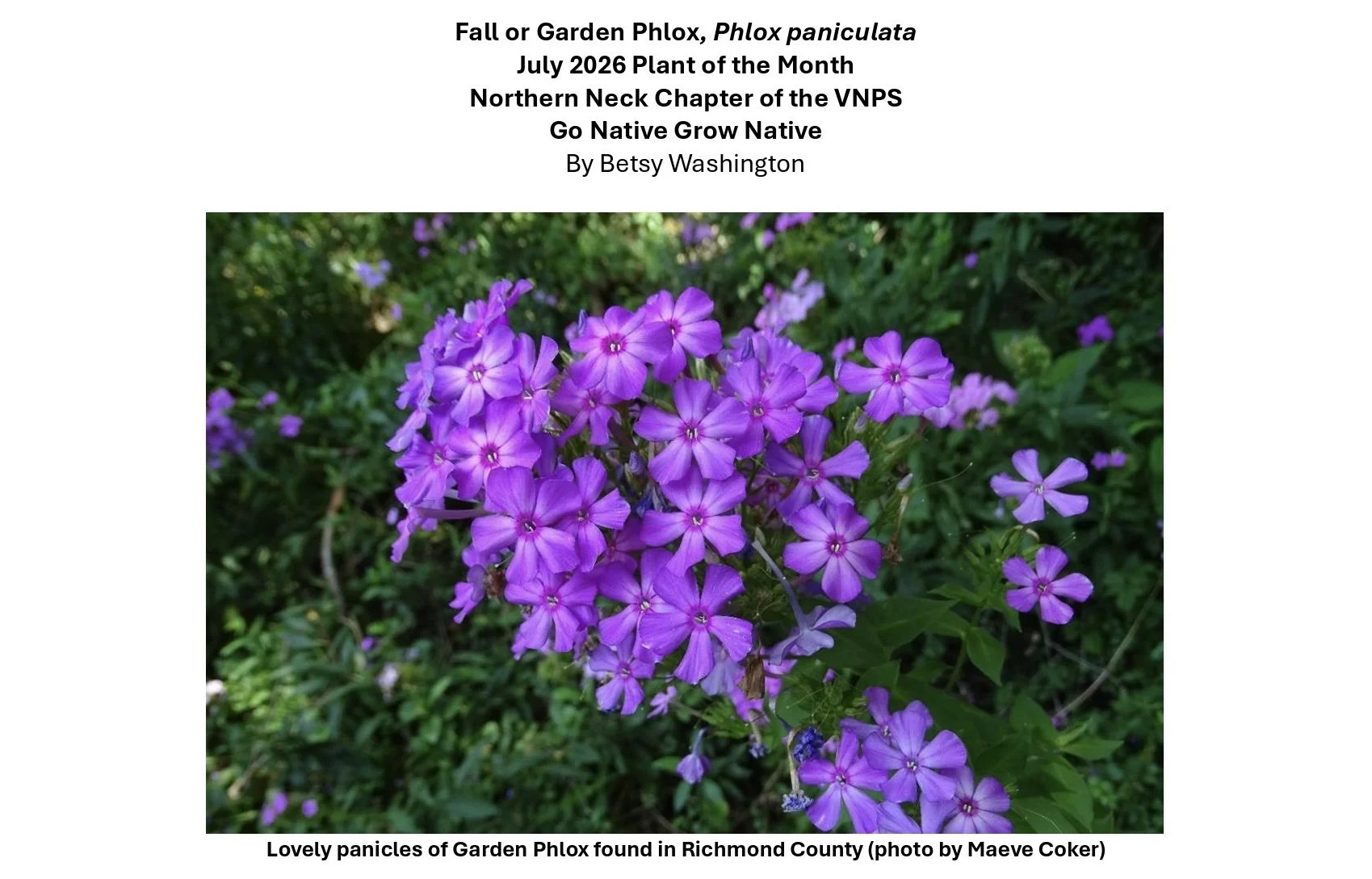
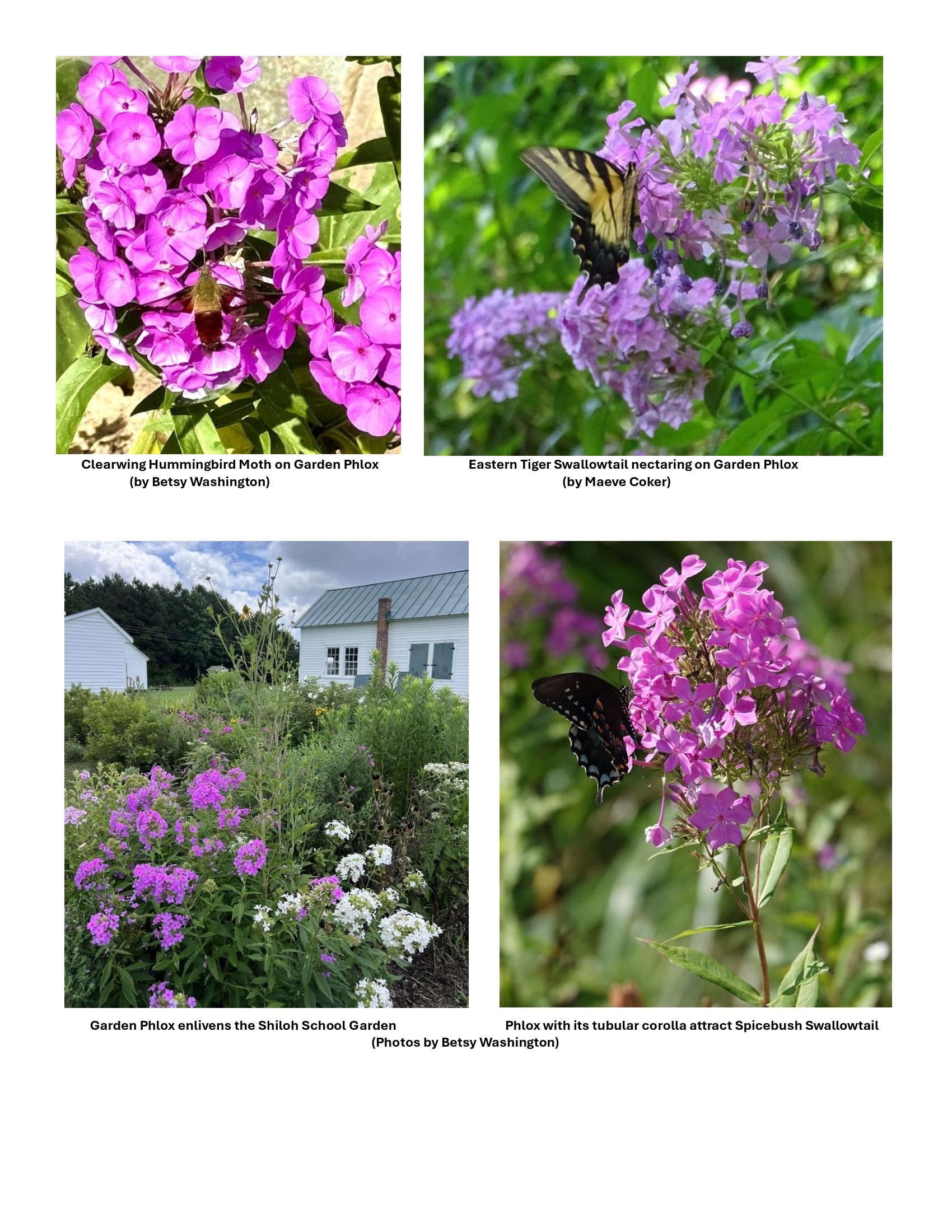
I am always dazzled by the vibrant, long-lasting blooms of Fall or Garden Phlox as they emerge in July attracting dozens of butterflies, skippers, Clearwing Moths, hummingbirds and other pollinators to their showy blooms. The large, fragrant pink to red-purple, lavender or rarely white flower clusters (actually panicles for which they are named Phlox ‘paniculata’) bloom from July through September above lush green foliage on slender, erect stems that rise from 2 – 4’ high. The slender, elliptical dark green leaves are pointed and arranged opposite each other along the stems. Phlox are clump formers and individual plants grow about 2 – 3’ wide. The individual flowers are about ¾” wide with a tubular corolla opening into 5 flat, rounded petal-like lobes. These individual florets are held in large dense, domed panicles that are 6 – 8” high creating a vivid show and bringing fresh color to summer and fall landscapes. These popular perennials have a variety of common names indicating their long and showy bloom season from Garden to Summer or Fall Phlox to Perennial, all or Panicled Phlox. No matter which common name you prefer, a mass of Garden Phlox will be a highlight in any summer garden.
Garden Phlox are native to the eastern United States from New York and Iowa south to Georgia and Mississippi. They are recorded from most counties in Virginia and are listed as frequent in the mountains and Northern Piedmont but infrequent elsewhere, occurring in well drained floodplain forests, rich to dry-mesic upland forests, rich cove forests, along stream banks and wet meadows and roadsides. Despite being infrequent in the coastal plain and parts of the Piedmont, Garden Phlox is a popular ornamental plant widely cultivated in gardens and may well have escaped and become established in scattered locations.
Garden Phlox grows best in moist but well drained soil in full sun to light shade. It is tolerant of soil pH and appreciates soils that hold moisture with a living or light mulch that helps keep the soil cool. Once established, I find they are easy going with occasional supplemental watering and am always dreaming of ways to add more to my gardens. They are even resistant to black walnuts, the notorious allelopathic tree that produces biochemicals which suppresses the growth of most plants around it. They are a great substitute for the invasive non-native butterfly bush (Buddleja) that does attract butterflies but does not host a single species of butterfly (a 7-Eleven of the butterfly world). But Phlox attracts just as many or more butterflies to their nectar rich flowers and they host the caterpillars of at least 7 species of butterflies and moths including the Hummingbird Clearwing Moth, Virginia Tiger Moth and Painted Lady Butterflies. Birds relish the seeds in fall and hummingbirds love them. Phlox does not tolerate drought and appreciates supplemental watering in prolonged dry spells but may suffer root rot in poorly drained soils. Garden Phlox is also susceptible to powdery mildew in hot, dry conditions, so it is best to avoid overhead watering and thin out overly crowded plants. Several references indicate it is relatively deer resistant, however I find young or new plants are occasionally browsed by rabbits or deer, but my established plants are rarely bothered. Members of the Phlox genus have long been valued and used in traditional and Native American medicines. An extract of leaves of Phlox paniculata are cited as being used as an aid for digestion, as a laxative, and for external treatment of boils and other skin issues.
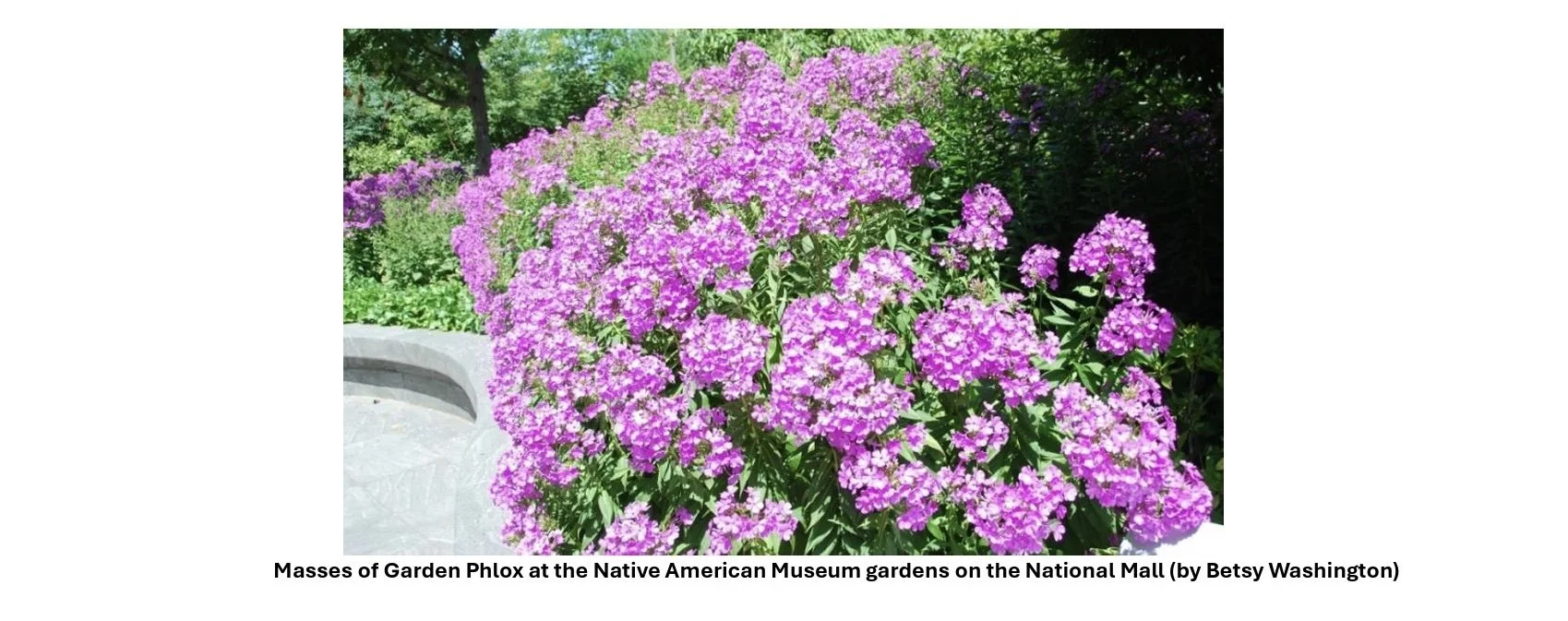
Garden Phlox are gorgeous when planted in drifts or masses and are beautiful along walkways enticing you down the path with their vibrant color and fragrance and the loads of pollinators and hummingbirds they attract. They are a natural choice for pollinator, butterfly, songbird or cottage gardens and make excellent cut flowers. And as an added bonus, they blend well with a variety of summer blooming perennials enhancing your garden’s appeal.
The native species is truly magnificent with its vibrant magenta to pink panicles and is the best choice for supporting pollinators and biodiversity. While there are dozens of cultivars of Garden Phlox, they rarely come true from seed and may seed into natural areas beyond your garden diminishing natural stands. Dead-heading can prolong bloom and help prevent plants inadvertently seeding into surrounding areas. Choose native and bring your gardens to life by inviting this fragrant, long blooming species into your garden. Be prepared to fall in love!