Plant of the Month June 2026: Redring or White Milkweed
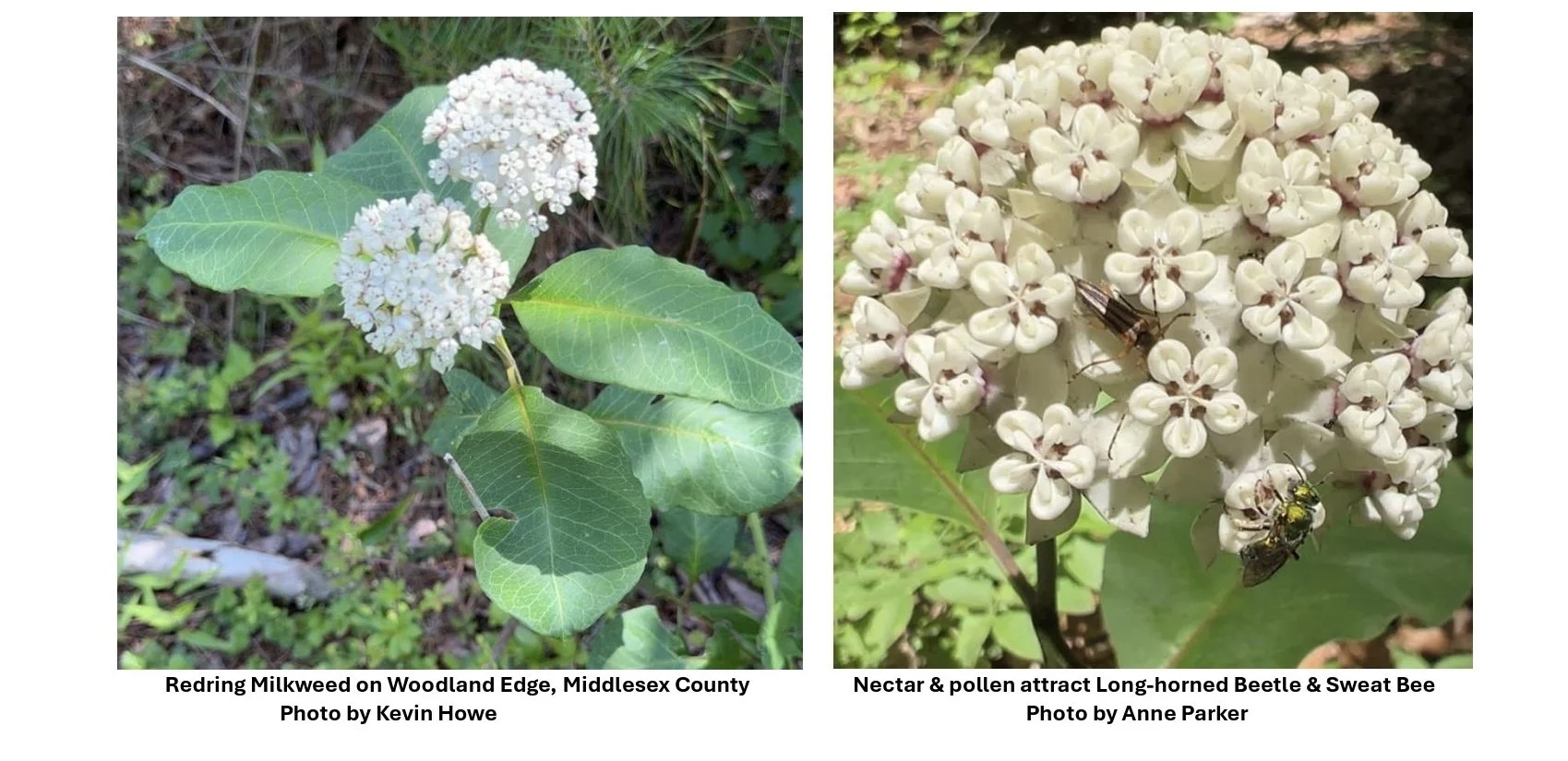
Milkweeds are wildly popular in many gardens but most of us grow only 2 or 3 species, including Butterflyweed and Swamp Milkweed and possibly Common Milkweed. There are thirteen species of milkweed in Virginia and one of my favorite blooms in late May and June, Redring or White Milkweed. I am always excited to see this beautiful milkweed in bud and bloom each June at Hickory Hollow Natural Area Preserve off woodland trails where its pristine white flowers literally glow against the dark woodlands. A number of folks have reported finding it around the state, often in upland forests or old fields, and several patches were spotted at a recent bioblitz along Dragon Run properties. Redring Milkweed is not nearly as well known as the more familiar butterflyweed or Swamp Milkweed yet occurs in most counties in Virginia. Unlike many of the more familiar Milkweeds, it grows in often dry upland forests, borders and old fields where it is frequent in the Coastal Plain and Piedmont and infrequent in the Mountains. Look for it along dry shaded roadsides, open forests and woodland edges and savannas. It prefers light to moderate shade and dry sandy soils where it tends to occur in low densities.
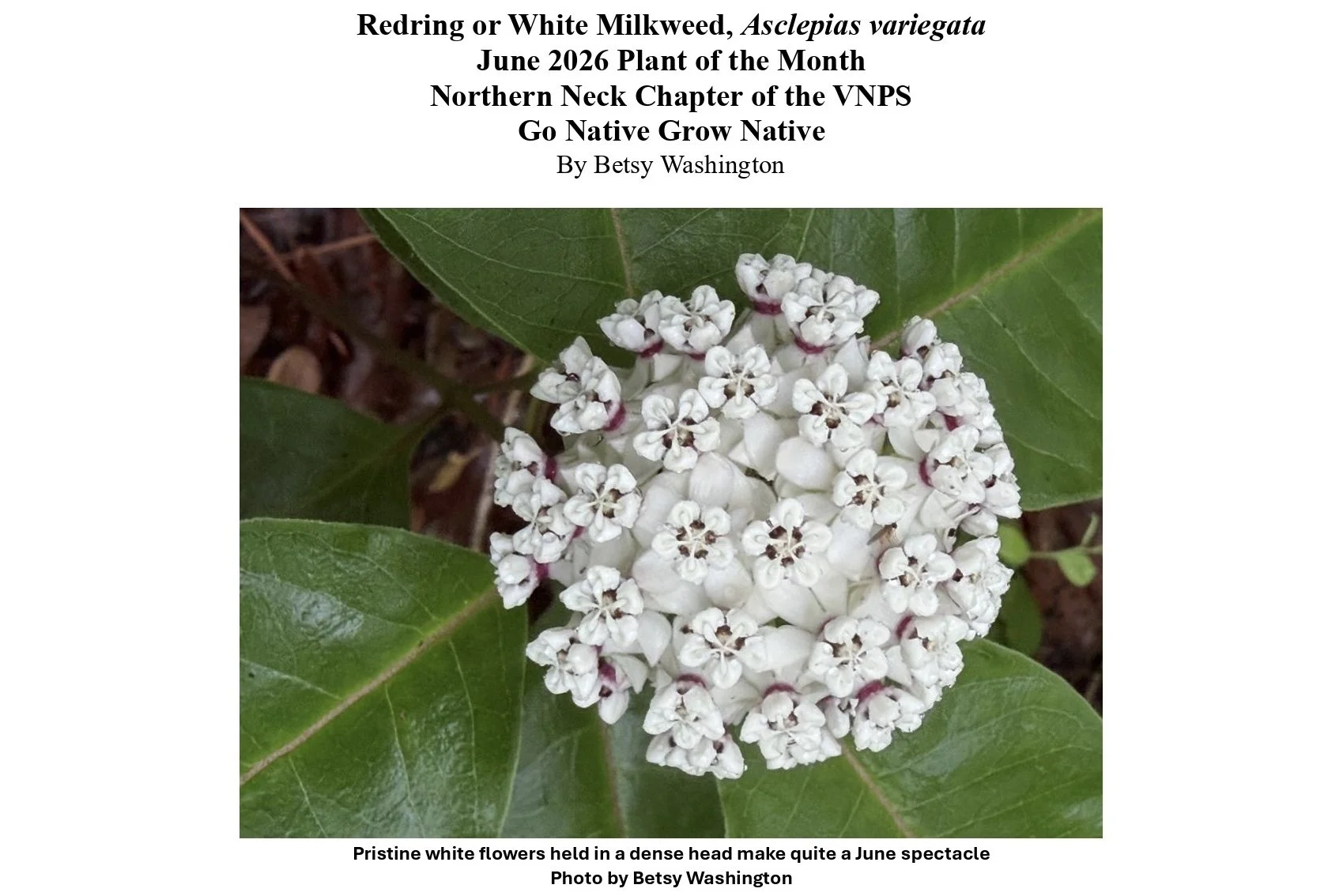
This lovely Milkweed typically grows 2 – 3’ tall, with about 4 – 6 pairs of thick elliptical leaves arranged opposite each other on the stout stems. Leaves are green occasionally with lavender tints and pale undersides and about 3 – 6” long. In late May, incredibly showy pure white flowers begin to bloom at the top of the stems in dense, erect, hemispherical clusters. Each individual flower is only ¼- 1/3” wide, waxy white with a line or ring of purple or red visible at the base of the corolla. The umbels or clusters of flowers are long-lasting with up to 30 flowers packed in each head. The flowers are sweetly fragrant if you take a sniff and produce copious amounts of nectar attracting long-tongued bees, wasps, skippers and other butterflies, flies and ants and the occasional butterfly. Most reports say they are not an important food source for Monarchs, which typically are not found in shady forests. In late summer slender, upright seedpods form often in pairs at the top of stems filled with seeds with silky hairs that aid in seed dispersal on the wind.
This charming milkweed prefers light to moderate shade and dry sandy or rocky soils but tolerates full suns and clay soils. It tolerates dry, nutrient poor soils and is drought and highly deer resistant. Like other milkweeds it has a bitter-tasting, milky latex sap which contains toxic cardio glycosides that are avoided by herbivores. Like other milkweeds, it has a deep taproot that helps it survive drought and the periodic fires that occurred here historically.
The Milkweed genus, Asclepias, is named for Asklepios, the Greek god of medicine and historically have been used medicinally to treat Pleurisy and other lung diseases and to remove warts. In fact, Butterflyweed is often called Pleurisy-root!
This unusual Milkweed is wonderful in mass plantings and as an accent in small groups in pollinator gardens where it is listed as having special value for native bees and along woodland edges or paths. Several sources recommended growing Redring Milkweed from seed.
We would love to grow this milkweed (or other uncommon milkweeds) for our Annual Plant Sale so if you are lucky enough to have this beautiful milkweed on your property and are willing to share seeds or a seedpod, we would be thrilled. Contact us at nnvnps@gmail.com