Plant of the Month September 2026: New York Aster
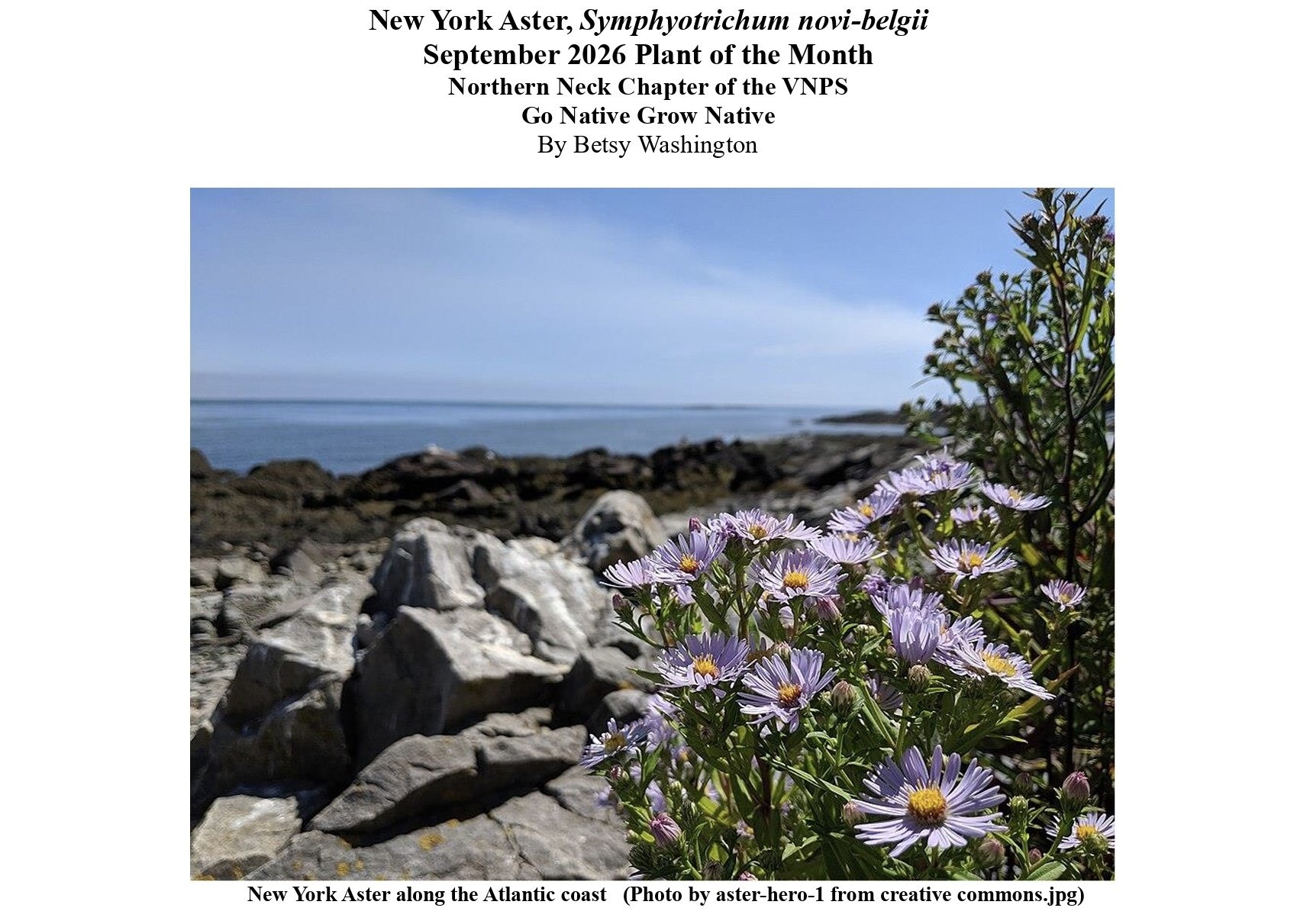
In Fall, many of our native Asters literally light up the landscape with their daisy-like flowers that are vivid lavender violet, blue violet, pale blue or even white. These late season bloomers are critical food sources for migrating Monarchs and other late butterflies, as well as pollinators such as Queen Bumblebees as they prepare for winter. They support at least seven species of specialized miner and cellophane bees that emerge only in the fall and collect Aster pollen for their young who depend on this Aster pollen to grow and survive. In fact, Doug Tallamy, author of “Bringing Nature Home”, considers Asters a “keystone” genus because they support over 100 butterfly and moth caterpillars including our showy Pearl Crescent butterflies. Only our native goldenrods (Solidago sp.) support more caterpillars. In addition, these asters are just plain beautiful and are mainstays of any fall border. Many species flourish in our gardens as well as our natural landscapes.
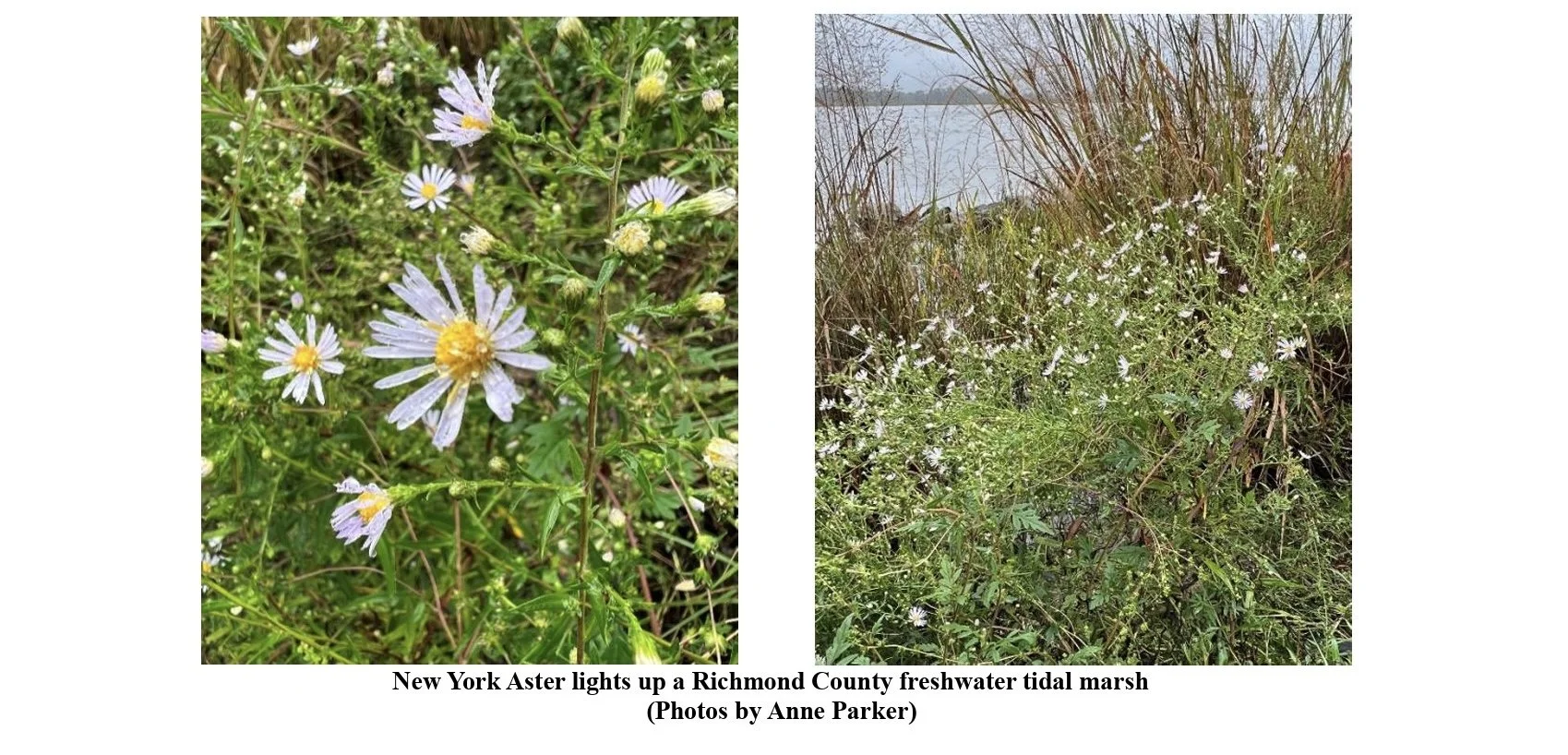
New York Aster is a particularly showy and relatively low-growing aster with vivid violet-purple flowers that literally smother the plants in September and October. The largest populations occur in the Atlantic Coastal Plain of the Northeastern United States and Canada including the Chesapeake Bay area. In Virginia, New York Asters are found along freshwater and slightly brackish tidal marshes, swamps, wet flatwoods and interdune swales and other moist areas. It is frequently found in the south and central Coastal Plain including Richmond County in Northern Neck.
Sometimes called American Aster or Michaelmas Daisy, its low bushy habit and showy violet-purple flowers have long been admired both in nature and as a popular garden plant. In fact, it was one of the earliest American wildflowers sent to Europe where it was enthusiastically welcomed into gardens as early as the 17th century. There it became known as the Michaelmas daisy in celebration of the feast of St. Michael on September 29th when it was in peak bloom.
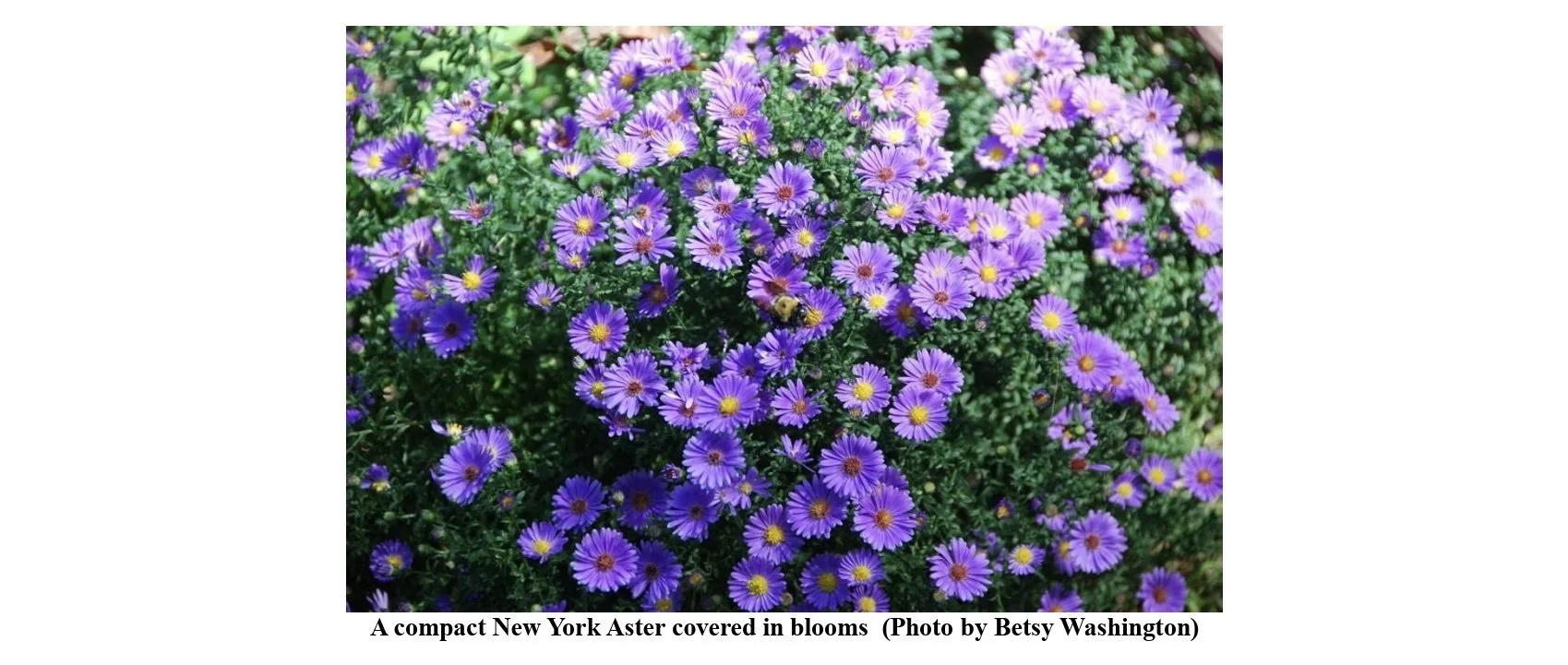
New York Aster is particularly stunning with its upright spreading habit and dense branching. After many flowering perennials have finished for the season, this aster is covered with panicles of showy 11/2 - 2” diameter violet blue flowers from September through October. Growing only 3’ to 4’ high, it is smaller than many of our taller Asters. The showy flowers consist of 20 – 50 purplish ray petals or florets, surrounding a central disc of tiny, tubular yellow florets that turn reddish as they mature. Like all Asters, the leaves are alternate and narrowly lance-shaped with smooth margins and slightly clasping bases that attach directly (sessile) to the green or reddish stems.
This Aster is a splendid addition to any Fall garden. While tolerating part shade, it grows and flowers best in full sun. Give it moist, fertile soils where it will flourish but it also does fine in regular garden soil with extra watering during prolonged dry spells. Stems can be pinched back in early June to create a shorter and bushier plant that will result in even more blooms. New York Aster has slender creeping rhizomes and will eventually spread into small colonies. It is relatively deer resistant and is rarely troubled by diseases or pests. Try it in your fall borders, butterfly or pollinator gardens, along the edges of swamps, ponds or streams where it helps stabilize the soil, in rain gardens or in moist meadows. There are dozens of compact cultivars which make a great replacement for the ubiquitous chrysanthemums, all while supporting wildlife. But it is always best to plant the straight species that has co-evolved with pollinators to support biodiversity.
Indigenous people have long valued New York Aster for its medicinal properties. Infusions from the roots were used to treat fevers, sore throats and headaches and in medicinal ceremonies.
This lovely perennial, as well as other asters, can be the star of your fall garden and are one of the most important late season nectar and pollen sources for migrating butterflies such as Monarchs, bees, and other pollinators. In addition, its seeds support numerous songbirds including goldfinches and pine siskins, as well as small mammals.
If New York Asters sound like the perfect plant for your fall garden, you are in luck! We will have at least 35 New York Asters ready to burst into glorious bloom as well as several other gorgeous Asters for sale at our Fall Plant Sale. Come visit us at Good Luck Cellars Friday Sept 11 at 2:30 – 4:30 (our members only sale but you can come join at the sale and shop), or at our public sale Saturday, Sept. 12 from Noon to 3:00 and Sunday from 1:00 – 3:00. Over 180 species of gorgeous native plants are waiting for you! We have a complete list of sale plants posted on our website at www.vnps.org