Plant of the Month August 2026: Sweet-scented Joe-pye-weed
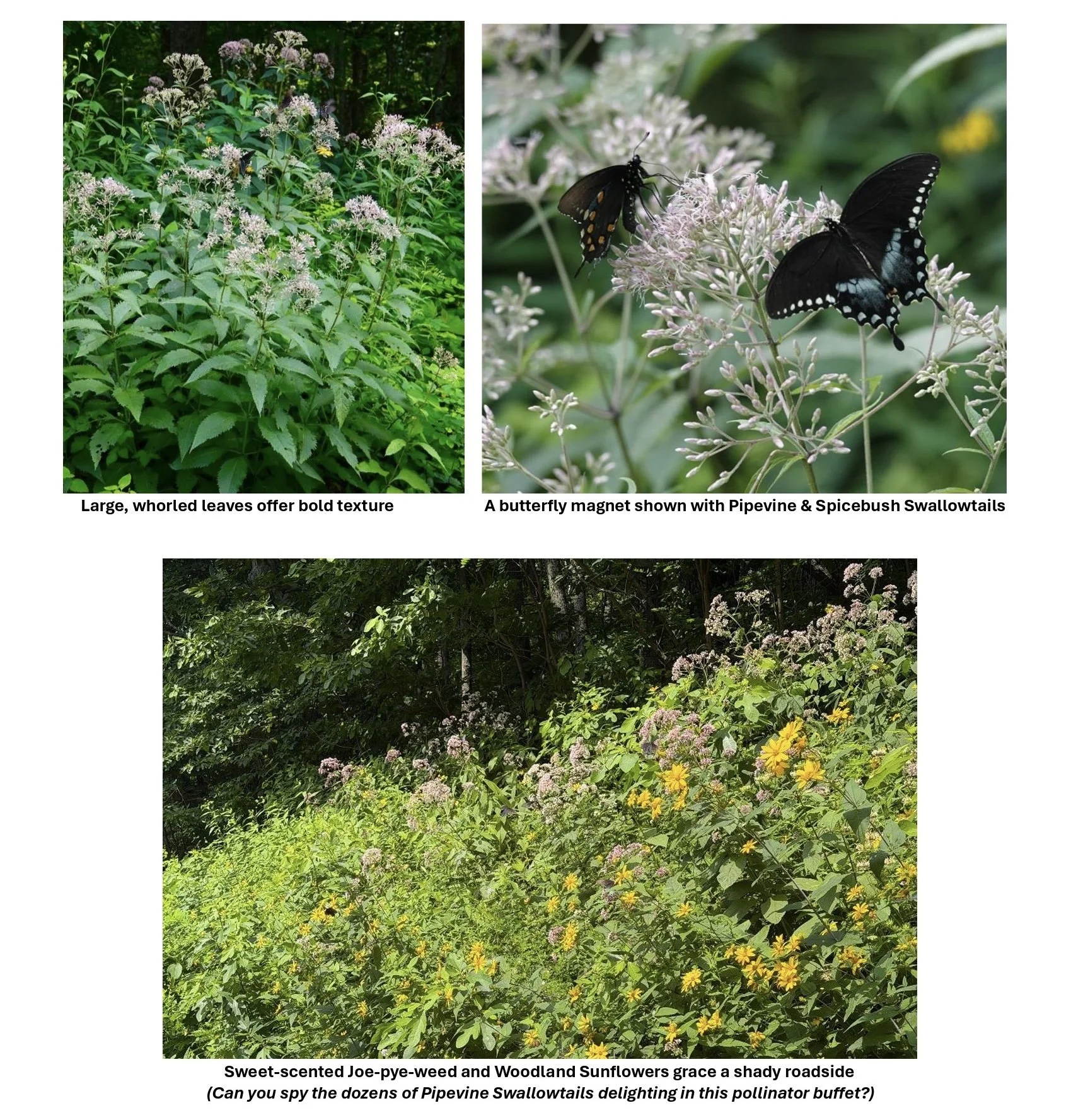
In late summer the vanilla scented flowers of Sweet-scented Joe-pye-weed fill the garden and landscape with billowy clouds of long-lasting blooms covered with bees and butterflies. This gorgeous tall perennial can reach 4 – 7’ high topped with large dome-shaped pink to purple inflorescences up to 12 – 18” across. Sweet-scented Joe-pye-weed is a clump former with erect, mostly unbranched smooth green stems with distinctive whorls of 3 – 4 large, toothed, lance-shaped leaves arranged at intervals along the stems adding bold architectural interest. The long-blooming, nectar-rich flowers bloom from July through September and can form the cornerstone of late summer gardens both in terms of striking beauty and as an ecological resource for a diverse array of pollinators including butterflies, moths, long tongued bees, and even hummingbirds. Its late blooming flowers are an important nectar source for migrating Monarchs and are often covered in Swallowtails. It also hosts the larvae of at least three dozen species of moths and butterflies that depend on its leaves. Further, a number of bumblebee miner bee species depend on its pollen for their young.
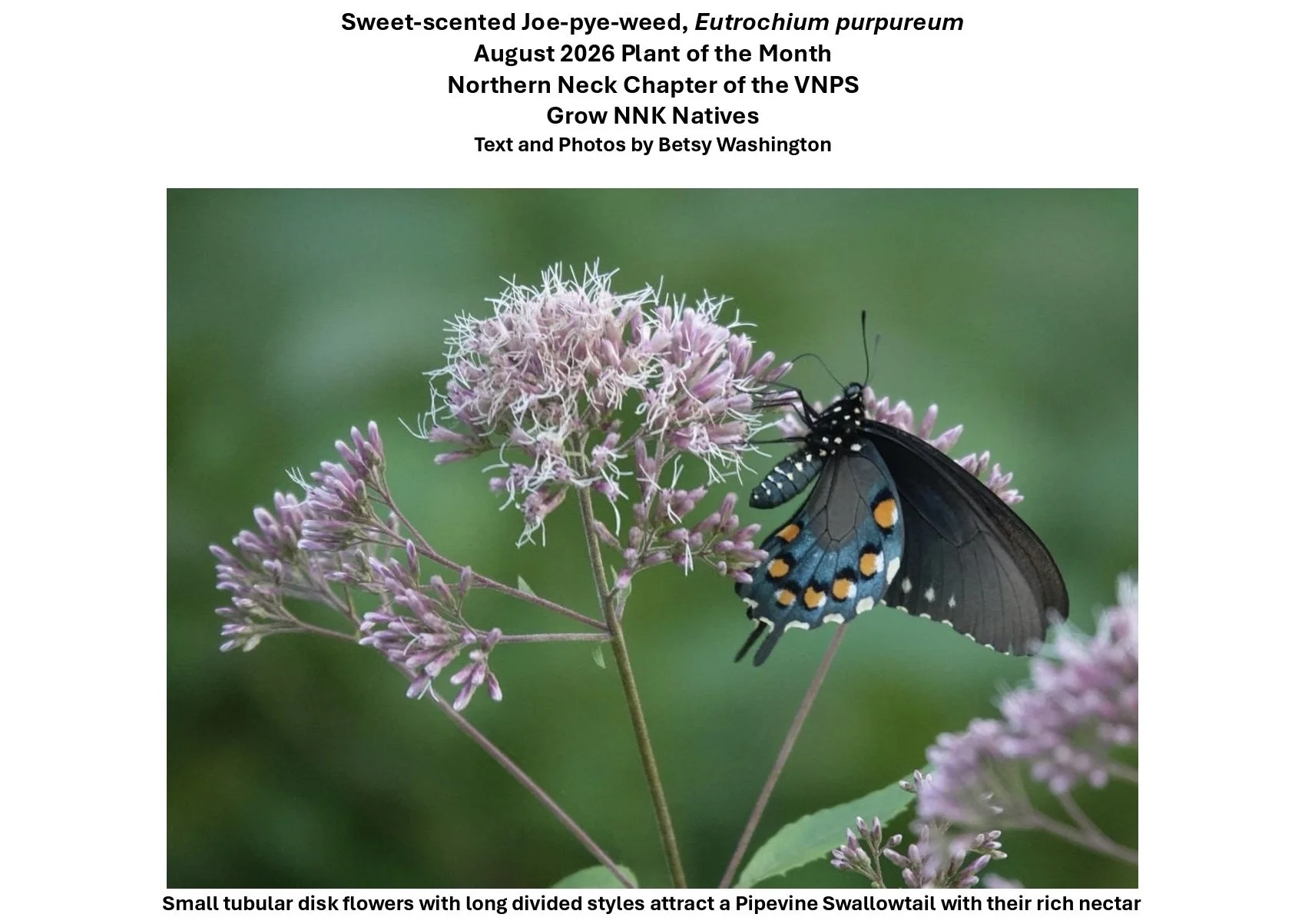
Although Sweet-scented Joe-pye-weed is a member of the Aster family, its flowers do not have the typical ray florets (or petals) like most asters or daisies but instead consist entirely of tiny tubular pinkish to purple “disk” florets arranged in clusters of 4 – 7. Each tubular floret has a distinctive divided white style (female reproductive structure) that extends far beyond each floret giving a soft, fuzzy appearance. The small single seeds (achenes) have a small tuft of hairs that aids in wind dispersal and the dried seedheads extend the season of ornamental interest and provide sustenance for songbirds like swamp sparrows.
Sweet-scented Joe-pye-weed is native to Eastern and Central North America extending from Ontario and New Hampshire south to Florida and west to OK and Louisiana in the south. In Virginia it occurs in nearly all counties in moist to somewhat dry upland forests, especially in the mountains, to well-drained floodplain forests, seepage swamps and fens. It is common in the mountains and inner Coastal Plain but infrequent in the outer Piedmont and Coastal Plain.
In the garden, Sweet-scented Joe-pye-weed is prized for its easy-going nature and low maintenance requirements. Compared to other species of Joe-pye-weeds it is more drought tolerant, preferring rich but well drained soils in light shade or part sun but tolerates a surprising amount of shade and even occasionally wet soils. It is resistant to deer and rabbits and is generally pest and disease free, however it may suffer leaf scorch in excessively dry soil or during prolonged droughts.
Try Sweet-scented Joe-pye-weed in a pollinator or butterfly garden or in a perennial garden where its height, architectural foliage, and stunning flowerheads create a dramatic backdrop. It is also perfect for meadows and woodland edges especially in rich or moist soils or along ponds or streams or even in rain gardens. In the Mountains it often forms a key part of tall shady ‘meadows’ in open areas or along the edges of oak and hickory forests along with ferns and other wildflowers like Woodland Sunflower, Cut-leaf Coneflower, or early goldenrods and asters. All Joe-pye-weeds make wonderful garden and pollinator plants but this species stands out for its tolerance of shadier and drier sites.
These stunning plants have a number of common names including Purple Joe-pye-weed, Pride of the Meadow and Marsh Milkweed but my husband points out that you will surely want to know why it is so often called Joe-pye-weed. Around the early 1800’s, a prominent Mohican chief (or leader) in Massachusetts named Joseph Shauquethqueat, was given the nickname Joseph or Joe Pye. It is likely that as a leader he may have shared his knowledge of the plant’s medicinal value with the settlers and before long, his name, Joe Pye became associated with this statuesque and ecological keystone plant.
Save the Date: You can find Sweet-scented Joe-pye-weed and many more wonderful and often hard to find native plants at our Annual Plant Sale on September 12 from 12:00 – 3:00 and 13th from 1:00 – 3:00 at Good Luck Cellars in Kilmarnock. Members can shop early on Friday, September 11 from 2:30 – 4:30 so come join us! Find more information at www.nnvnps.org