Plant of the Month January 2026: Ebony Spleenwort
Ebony Spleenwort, Asplenium platyneuron
January 2026, Plant of the Month
Northern Neck Chapter of the Virginia Native Plant Society
By Betsy Washington
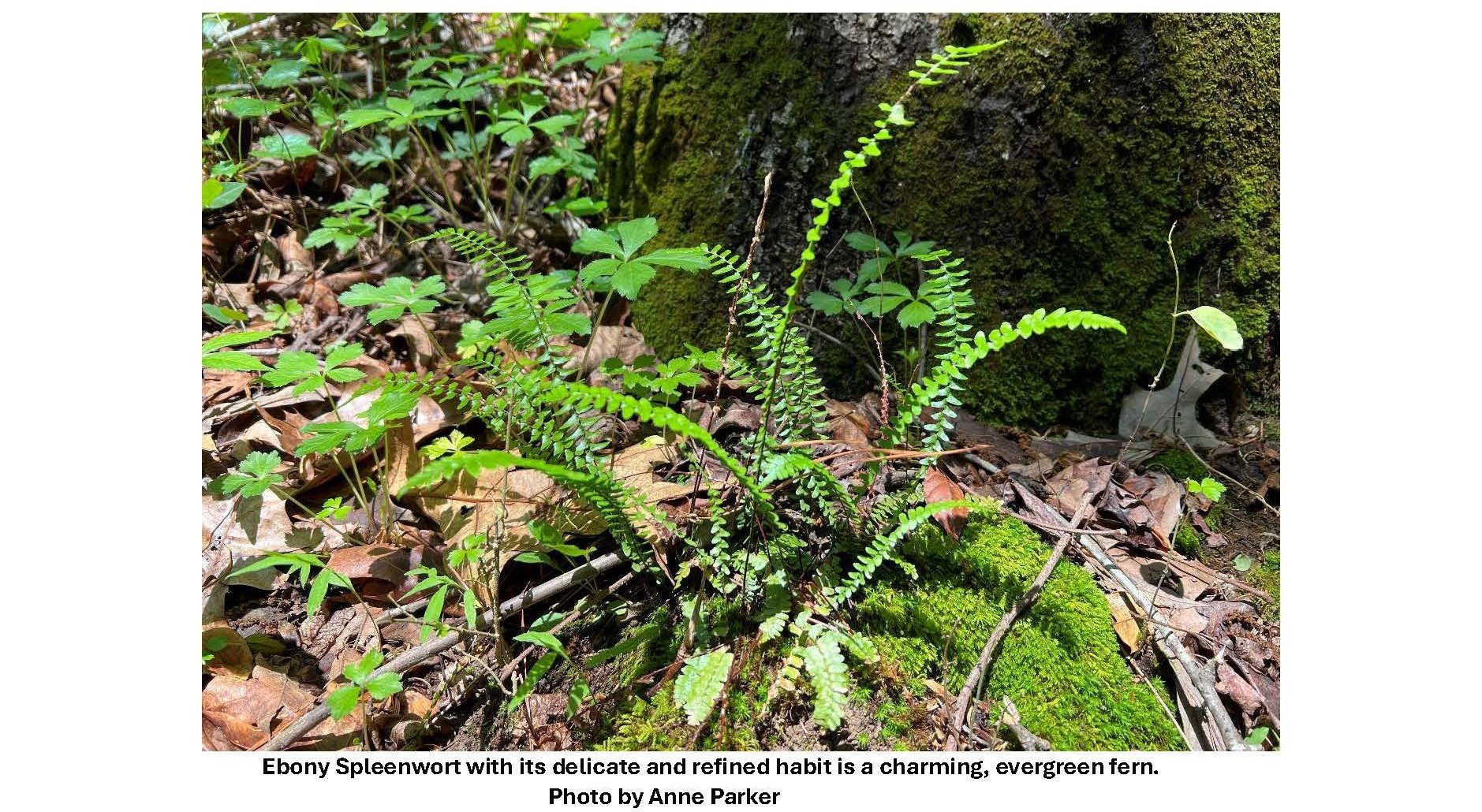
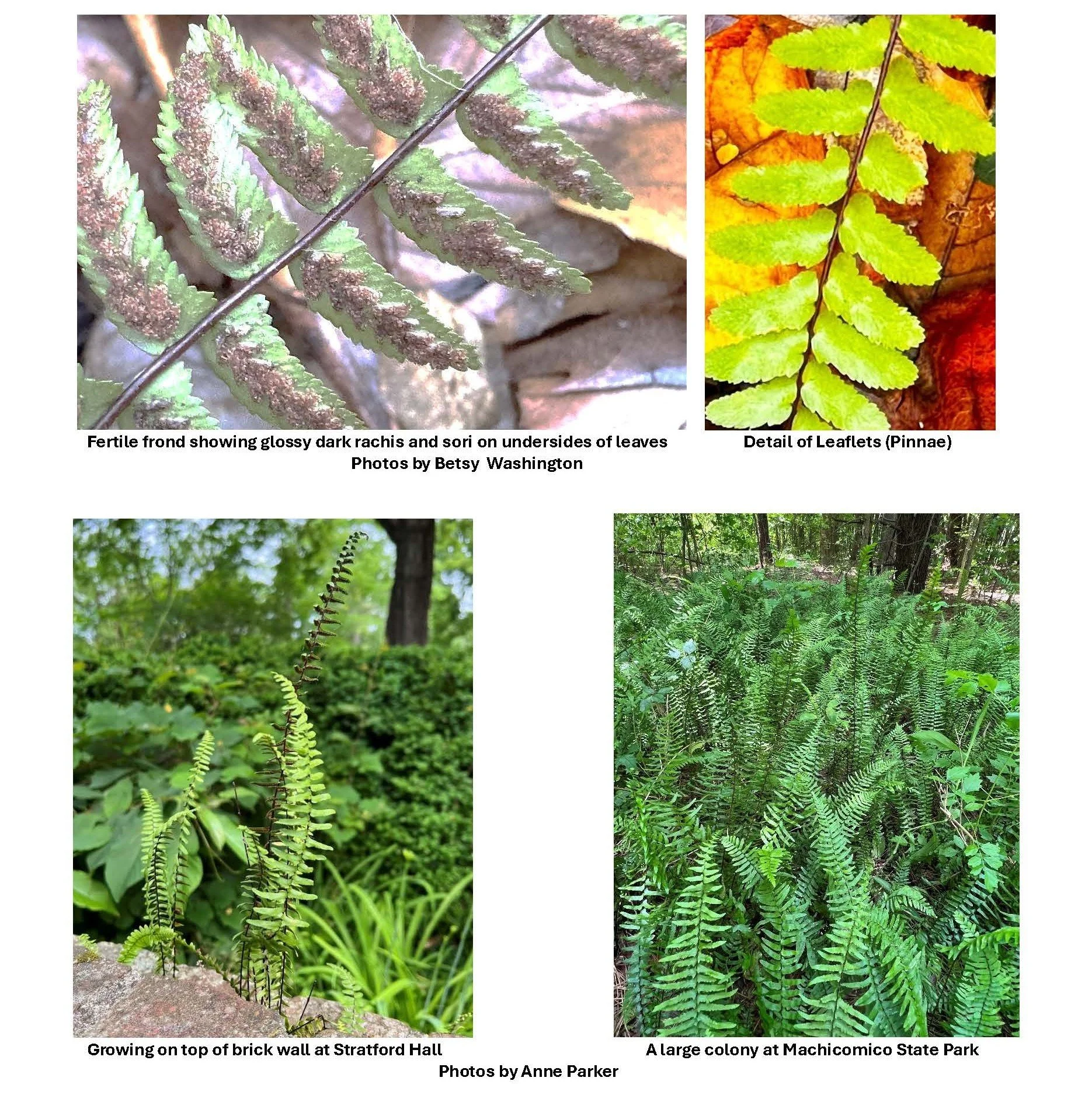
Ebony Spleenwort is a charming small, evergreen fern that grows in dense tufts with dark green narrow fronds with a distinctive, wiry dark reddish brown shiny main stem (stipe). In fact, it gets its common name, Ebony, from this very distinctive dark shiny stipe. The narrow fronds (leaves) range from 6” to 18” long and 1 – 2” wide and have 15 – 70 leaflets (pinnae) that typically alternate along either side of the central stalk (rachis), like the rungs of a ladder. They decrease in size towards the frond tip and also towards the base. Individual leaflets are a matte, light green and have finely crenate-serrate margins (small scalloped-rounded teeth) and a distinctive small ear-like lobe (or auricle) at the base of each on the upper side. This gives the individual leaflets a distinctive asymmetrical or deltoid appearance adding to the appeal. Noted horticulturist, William Cullina, author of Native Ferns, Mosses and Grasses, describes them this way, “Their small stature and intricate fronds convey an irresistible sense of refinement and delicacy” and “they have a refined grace far out of proportion to their modest size”.!
Ebony Spleenwort is unique among members of the spleenwort genus in several ways including that it has two distinct types of leaves (dimorphic). The sterile leaves are evergreen and form a vase-like basal rosette with short fronds that arch over and are often prostrate. In spring taller, stiffly erect, semi-evergreen fertile fronds emerge from the basal rosette, rising above the vase-like sterile leaves. Mature fertile fronds develop two rows of diagonal, elongate spore-bearing structures (sori) on the undersides of the leaflets and release these tiny spores to be dispersed by the wind in late summer and early fall. Once the spores are shed, the fertile fronds wither away. The whole effect of this delicate, small evergreen fern
is quite elegant especially when sited against a craggy stone or mossy log away from the competition of more boisterous plants.
Ebony Spleenwort is native east of the Rockies from Ontario and Quebec south to TX and Fl but intriguingly populations occur in southern Africa and Slovakia. In Virginia it occurs in every county and is considered common throughout. Unlike other Spleenworts found only on calcium rich, rocky substrates, Ebony Spleenwort is found in a variety of habitats from rocky outcrops, ledges, cliffs and talus slopes to high quality uplands, sandy woods, and even on red clay banks or sandy old fields and other disturbed habitats. This adaptable fern grows on soil as well as rocky and woody substrates.
Unlike many Spleenworts, which are highly sought after by horticulturists but have a reputation for being very challenging, Ebony Spleenwort is quite adaptable and well suited to growing in gardens where it prefers partial shade in both moist to dry sites. It is easy to transplant and will prosper in a variety of garden habitats including rock gardens, old tree stumps, sandy woodlands and banks. It prefers slightly acidic soil but also prospers in sites with high calcium levels along with other sought after calciphiles and will readily colonize old buildings or niches in walls or mortar joints. A couple of the most memorable landscape uses I have seen are small, elegant tufts of Ebony Spleenwort growing in niches and mortar joints in old brick walls adding irresistible distinction and charm. I have also admired them nestled among gnarled silvery Beech roots along a steep bank at the Westmoreland County Voorhees Nature Preserve and planted against a mossy log in Fern Valley at Washington, DC’s National Arboretum. They are equally at home nestled in a crevice in a shady rock garden; settings that highlight their intricate architecture and where they can thrive with little competition. Small vegetative buds on the lowest pinnae just above the ground will sprout if buried in leaf litter and form separate crowns, allowing an individual plant to spread into handsome colonies.
Like many ferns, Ebony Spleenwort seems to resist deer and other herbivores, but little is known about its wildlife value.
While not as large and eye-catching as larger ferns like Cinnamon or Royal ferns that can reach 4 or 5’, this little fern when carefully placed will add that special touch of distinction and charm to your garden and delight you throughout the year.